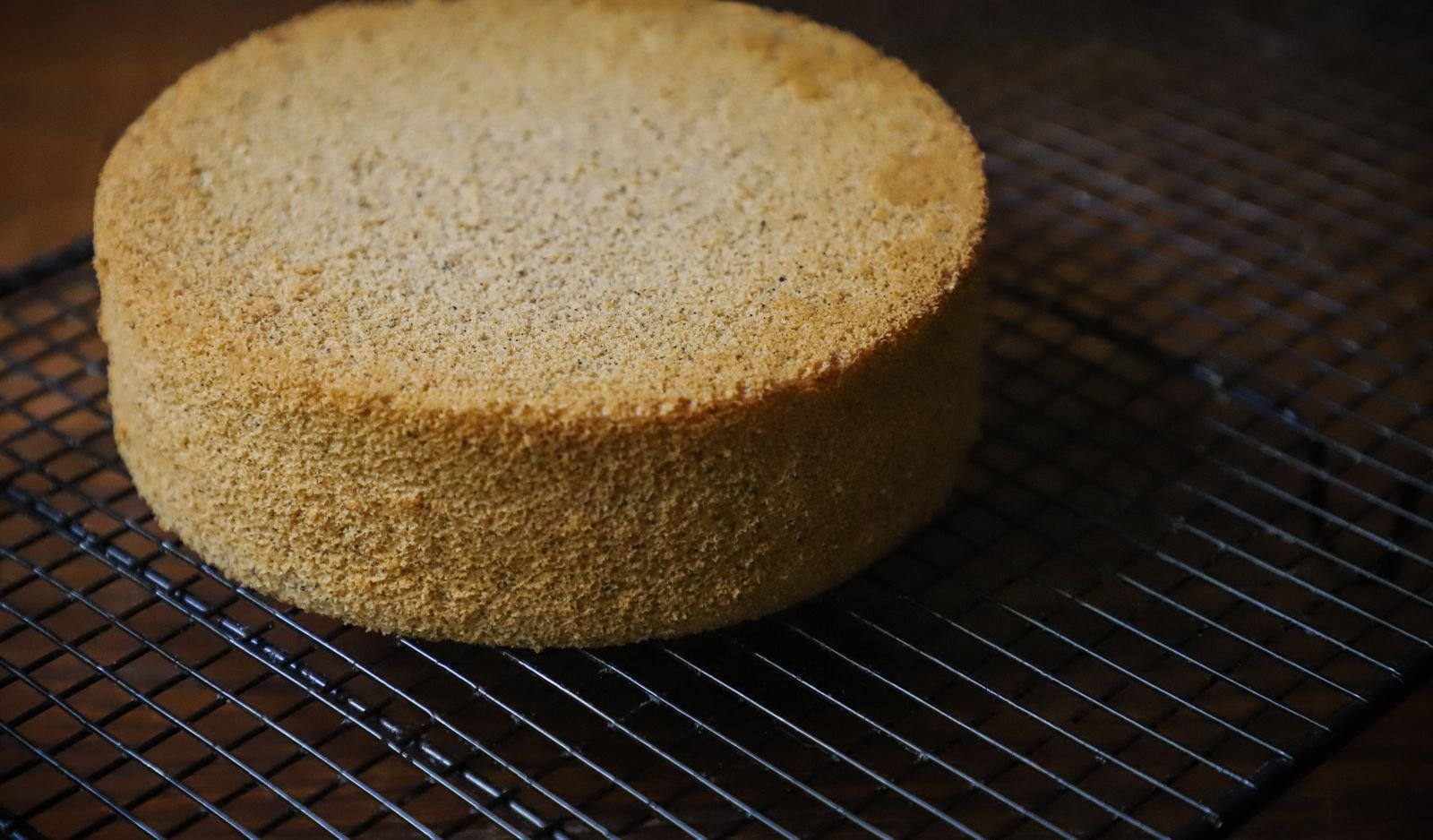
Génoise in US measures: 4 large eggs, ½ cup + 1 tbsp sugar, 1 cup + 1 tbsp all-purpose flour and 3½ tbsp brown butter, beaten warm until light and fluffy and baked at about 390 °F (200 °C) for 20 to 25 minutes in a 9-inch round pan. There is no baking powder: the whole rise comes from the air you whip into the eggs.
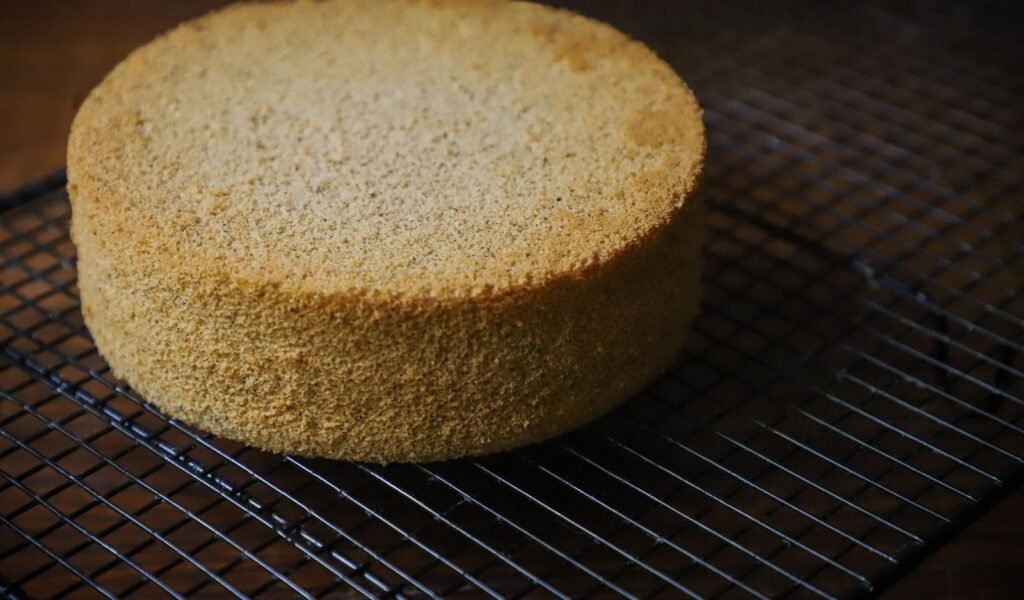
Génoise: the recipe in grams and US cups
| Ingredient | French recipe | US measure |
|---|---|---|
| œufs (à température ambiante)eggs (US large), at room temperature | 4 | 4 |
| sucre en poudregranulated sugar | 110 g | ½ cup + 1 tbsp |
| sucre vanillé (facultatif)vanilla sugar, counted as sugar (optional) | 15 g | 1 tbsp |
| farine (T45 ou T55)all-purpose flour | 125 g | 1 cup + 1 tbsp |
| beurre noisettebrown butter (beurre noisette) | 50 g | 3½ tbsp |
| amandes effilées (facultatif, pour le fond du moule)sliced almonds, optional, for the base of the pan | 30 g | about ⅓ cup |
Tap a row to tick it off. US measures use King Arthur Baking weights per cup; a scale gives the most exact result.
Method
- Warm the eggs: stand them in a pan of hot tap water for 10 minutes. If they were in the fridge, give them 20 minutes and change the water halfway. Also fill the mixer bowl with very hot water to warm it. Beating eggs warm gives more volume.
- Heat the oven to 200 °C (about 390 °F; Williams Sonoma bakes at 375 °F). Line the bottom of a 9-by-3-inch (23 cm) round pan with parchment paper, because génoise sticks badly. Scatter the sliced almonds on the parchment if you are using them.
- Brown the butter in a small pan until it smells nutty, then keep it warm. Pour it through a sieve when you use it, to catch the dark specks.
- Empty and dry the mixer bowl. Put in the eggs, sugar and vanilla sugar and beat at high speed for about 10 minutes, until the mixture is light and fluffy and starts to cling to the whisk. (Williams Sonoma's way: whisk the eggs and sugar over simmering water to 140 °F, then beat 5 to 8 minutes until pale and almost tripled in volume.)
- Turn the speed down and pour in the warm brown butter in a thin stream.
- Stop the mixer and sift the flour over the batter. Fold it in quickly with a whisk or large spatula, ideally in about 30 seconds, so the air you whipped in does not drain out.
- Pour the batter into the pan and bake 20 to 25 minutes, until the top is browned.
- Turn the cake out onto a wire rack while it is still hot (Cooking-ez), or cool it in the pan and run a knife round the edge before turning it out (Williams Sonoma). Leave to cool before filling. Kept in an airtight tin it holds for a few days.
Williams Sonoma bakes its four-egg génoise in a 9-by-3-inch round pan; Cooking-ez says only "a mould or tin" and lines the base with parchment. Changing pan size changes the batter depth, so check doneness early or late.
Converted from the traditional French recipe; not yet kitchen-tested by Mangez Moi.
The French way: air is the only raising agent
A génoise has no baking powder. Williams Sonoma puts it plainly: the cake’s leavening depends solely on how much air is whipped into the eggs, which is why both of our recipes beat whole eggs and sugar for a long time before any flour goes in. Wikipedia describes the same thing as air suspended in the batter, with the eggs beaten and warmed to what pastry cooks call the ribbon stage.
It is a lean cake. It gets its fat from the egg yolks and, in these two recipes, a small amount of butter. That is why it is dry on its own and is nearly always soaked in a flavored syrup or filled and layered, and why it is the base of so many French cakes: Wikipedia lists jelly rolls, bûches de Noël and layer cakes with jelly, chocolate, fruit, pastry cream or whipped cream.
Why the eggs go in warm
Both sources warm the eggs, by different routes. Cooking-ez stands the eggs in hot tap water for ten minutes, warms the mixer bowl too, and then beats immediately. Williams Sonoma whisks the eggs and sugar over simmering water until they reach 140 °F, then beats five to eight minutes until pale and almost tripled in volume. Williams Sonoma adds that the warm step is optional: without it you can still make a slightly denser, still satisfying cake.
Our two recipes side by side
We publish the Cooking-ez quantities because they are in grams, give an oven and a time, and carry the method to the end. The Williams Sonoma recipe, from a US cookbook author, is the same four eggs with a different balance:
| Recipe | Eggs | Sugar | Flour | Butter | Oven |
|---|---|---|---|---|---|
| Cooking-ez, as published | 4 | 110 g (+ 15 g vanilla sugar) | 125 g | 50 g beurre noisette | 200 °C, 20-25 min |
| Williams Sonoma, as published | 4 | ½ cup | ¾ cup sifted cake flour | 3 tbsp melted butter | 375 °F, about 20 min |
Cooking-ez uses more flour for the same four eggs: 125 g is the equivalent of 1 cup + 1 tbsp of all-purpose flour here, against ¾ cup of sifted cake flour at Williams Sonoma. Cooking-ez also browns the butter and gives the oven as 200 °C. We have not baked either, so we do not claim one is better.
The one step that decides the cake: the flour
Cooking-ez calls folding in the flour the tricky part. The whipped eggs are full of tiny bubbles, and the flour has to go in quickly (it suggests within about 30 seconds) or the mixture falls. Williams Sonoma folds the flour in two additions with a large spatula, and stirs a large spoonful of batter into the melted butter before folding that back in, so the butter does not sink to the bottom. Use whichever suits your hands, and stop the moment no dry flour shows.
Line the bottom of the pan with parchment. Cooking-ez says a génoise “sticks terribly” and is hard to turn out, and Williams Sonoma lines its pan the same way.
What to do with it
Cooking-ez names the cakes it is the base for: fraisier, Black Forest gâteau, baked Alaska and framboisier. It also gives one variation: for a chocolate génoise, take 50 g off the flour and add 20 g of cocoa powder. Stored in an airtight tin, it keeps a few days. See classic French cakes for how the others compare.
Tools used on this page: the recipe converter (grams to cups), French oven temperatures, the cake pan size converter and the French recipe abbreviations list.
Sources
- cooking-ez.com, "Génoise (Genoa sponge)", after Hervé This, who credits Michel Bras's method (last modified 14 September 2026) – 4 eggs, 110 g caster sugar, 15 g vanilla sugar, 125 g flour, 50 g beurre noisette, 30 g flaked almonds optional; preheat to 200 °C (390 °F), beat the warmed eggs and sugar at high speed about 10 minutes, bake 20 to 25 minutes. This page is the formula above
- Williams Sonoma, "Génoise", adapted from Fran Gage, Williams-Sonoma Collection Series: Cake (Simon & Schuster, 2003) – 4 eggs, ½ cup sugar, ¾ cup sifted cake flour, 3 tbsp melted butter, 9-by-3-inch round pan, 375 °F for about 20 minutes, eggs and sugar warmed to 140 °F over simmering water; says the cake rises only on the air whipped into the eggs and that a little butter tenderizes the crumb
- Wikipedia, "Genoise" – background only, no quantities: a French sponge cake leavened by air suspended in the batter rather than chemical raising agents, whole eggs beaten with sugar and warmed to the ribbon stage, usually thin sheets for jelly rolls and bûches de Noël, or cut into layers
The quantities are the traditional formula, cross-checked against the sources above; the method is written in our own words. US measures are computed from the King Arthur Baking ingredient weight chart by the same converter as our recipe converter.
More French recipes in cups
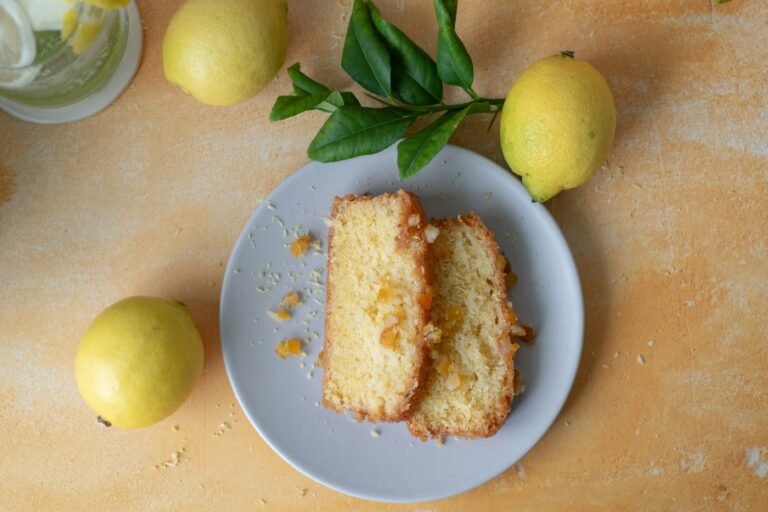 Gâteau au yaourtFrench yogurt cake, in grams and cups
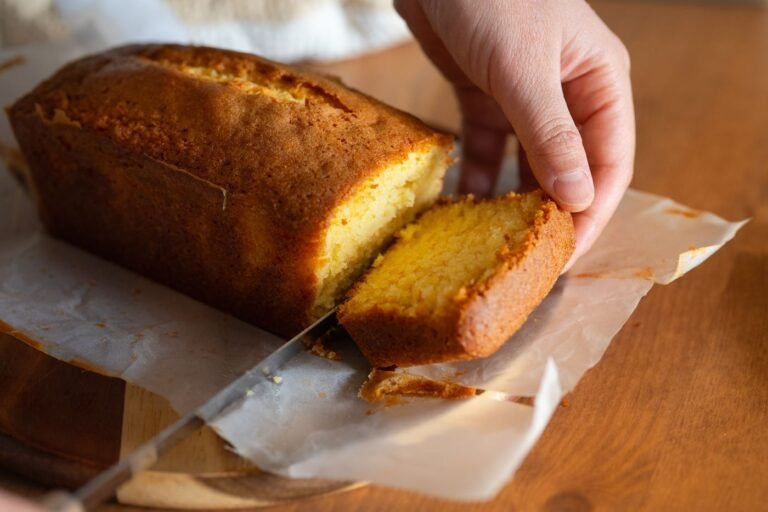 Quatre-quartsFrench pound cake, in grams and cups
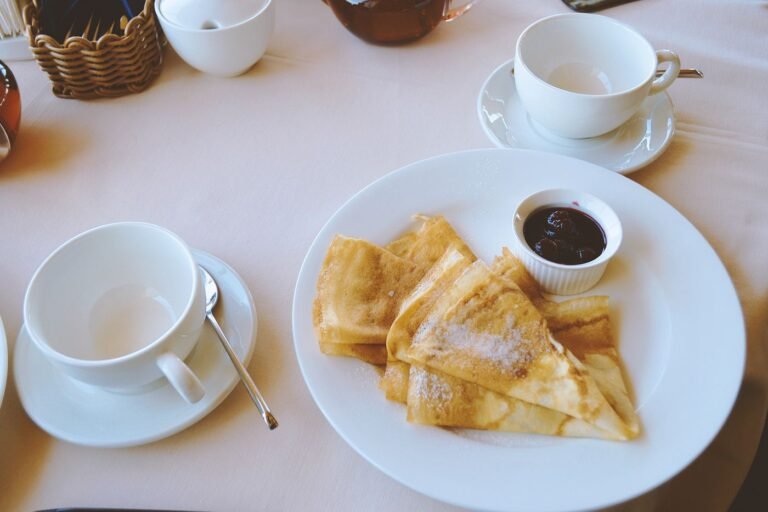 CrêpesFrench crêpes, in grams and cups
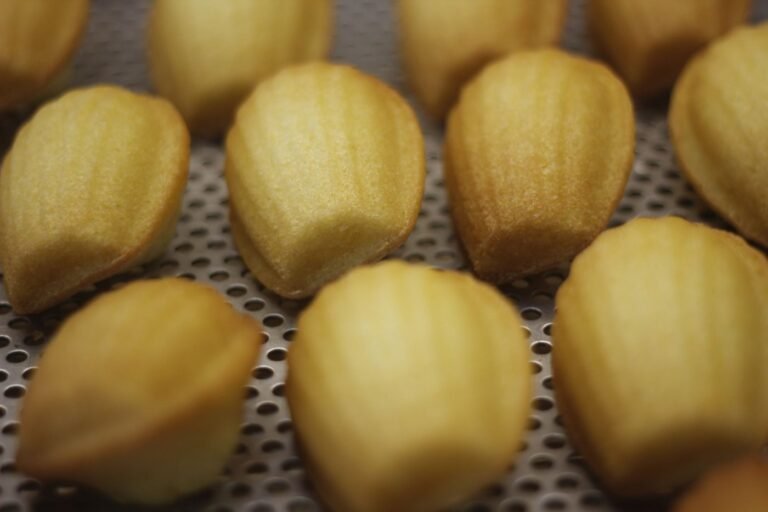 MadeleinesFrench madeleines, in grams and cups
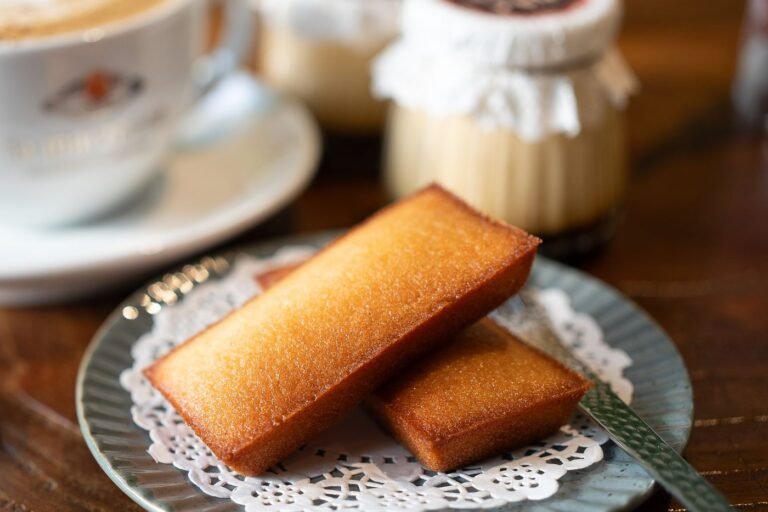 FinanciersFrench almond financiers, in grams and cups
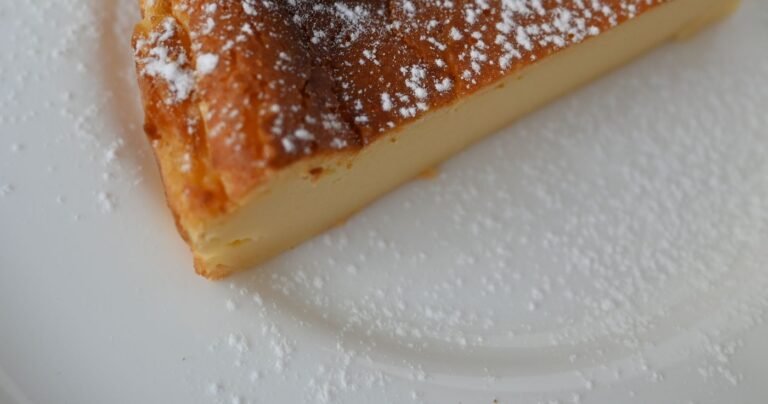 Far breton aux pruneauxBreton custard cake with prunes, in grams and cupsPaste your ownAny French recipe in cups and °F, with a link to share
Questions people ask
What is a génoise?
A French sponge cake with no baking powder: whole eggs and sugar are beaten warm until light and fluffy, then flour and a little butter are folded in. It is the base for many layered cakes.
Why did my génoise collapse?
The most likely cause is the flour going in too slowly or too roughly. Cooking-ez says the whipped eggs hold tiny air bubbles that give the cake its lightness, and that the flour has to be incorporated as fast as possible, ideally within about 30 seconds, or the mixture falls.
Do I have to warm the eggs?
Both of our sources warm them, because warm eggs whip to more volume. Williams Sonoma says you can skip heating the eggs and sugar and still get a slightly denser, still satisfying cake.
What size pan does the recipe use?
Williams Sonoma bakes its four-egg génoise in a 9-by-3-inch (23 cm) round pan, which is the size we show. Cooking-ez says only a mould or tin; line the bottom with parchment either way.
How many cups is 125 g of flour?
About 1 cup + 1 tbsp of all-purpose flour on our King Arthur-based chart. See grams to cups for 49 ingredients.
What oven temperature is 200 °C?
About 390 °F (Cooking-ez gives 390 °F), roughly thermostat 6-7 on a French dial. See French oven temperatures. Williams Sonoma bakes at 375 °F, for about 20 minutes.
Cite this page: Mangez Moi, “Génoise in Cups: French Sponge Cake, US Measures,” mangezmoi.com, updated October 15, 2026, https://mangezmoi.com/recipes/genoise/. Free to reuse under CC BY 4.0 with credit and a link.