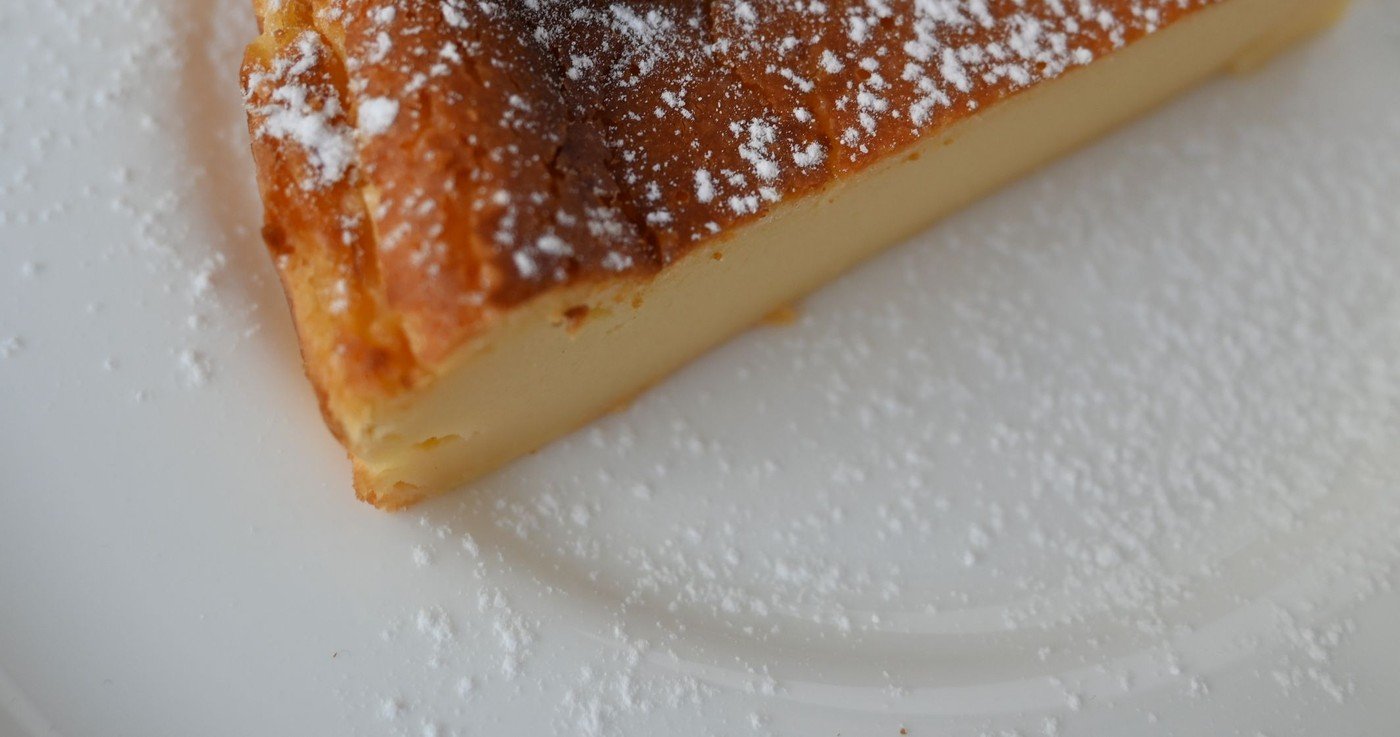
Far breton in US measures: 1⅔ cups all-purpose flour, ¾ cup sugar, 4 large eggs, 3 cups + 3 tbsp whole milk, a pinch of salt and 7 to 9 oz of pitted prunes, poured into a generously buttered dish and baked at 350 °F (180 °C fan) for 45 to 50 minutes, until browned and still trembling slightly in the middle. Eat it at room temperature or slightly cold, never warm.
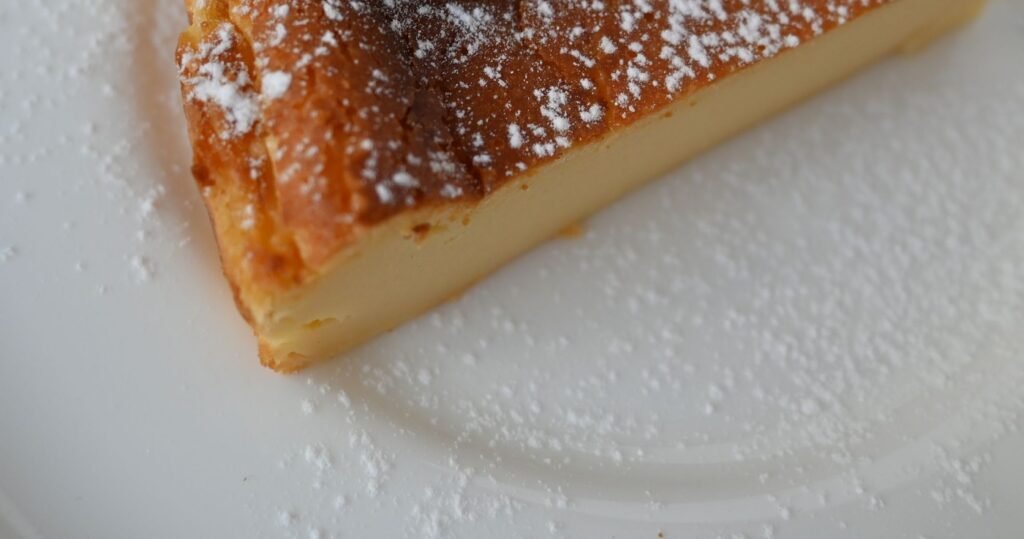
Far breton aux pruneaux: the recipe in grams and US cups
| Ingredient | French recipe | US measure |
|---|---|---|
| farineall-purpose flour | 200 g | 1⅔ cups |
| sucregranulated sugar | 150 g | ¾ cup |
| œufseggs (US large) | 4 | 4 |
| lait entier (75 cl)whole milk | 750 ml | 3 cups + 3 tbsp |
| pruneaux dénoyautéspitted prunes | 200 à 250 g | 7 to 9 oz (about 20) |
| sel (une pincée)salt | 1 pinch | 1 pinch |
| rhum, ou un peu de vanille (facultatif)rum, or a little vanilla (optional) | 1 bouchon | 1 capful |
| beurre demi-sel (pour le plat)salted butter, for the dish | 20 g | 1½ tbsp |
Tap a row to tick it off. US measures use King Arthur Baking weights per cup; a scale gives the most exact result.
Method
- Heat the oven to 180 °C fan (thermostat 6), which is 350 °F on a US dial.
- Stir the flour, sugar and salt together in a large bowl.
- Add the eggs one at a time, then pour in the milk a little at a time, whisking, until the batter is smooth and fluid – Tourisme Bretagne describes it as close to a thick crêpe batter. Whisk in the rum or vanilla if you are using it.
- Butter an oven dish generously with the salted butter. The source does not publish a dish size; any dish that holds the batter with room to spare works, and a 23 × 33 cm (9 × 13 in) dish is comfortable for this quantity. That dish size is our suggestion, not the source's.
- Scatter the prunes over the bottom of the dish.
- Pour the batter over the prunes.
- Bake 45 to 50 minutes, until the far is well browned and still trembles slightly in the middle.
- Let it cool before cutting. A far breton is eaten at room temperature, or even slightly cold – not warm. Both Breton sources are firm about that, and the Hennebont one says outright never to eat it warm.
Converted from the traditional French recipe; not yet kitchen-tested by Mangez Moi.
The French way: a batter you pour, not a cake you build
A far breton is closer to a baked custard than to a cake. There is no creaming, no folding and nothing to rub in: flour, sugar and salt are stirred together, the eggs go in one at a time, and then the milk goes in gradually while you whisk. Tourisme Bretagne describes what you are aiming for as une pâte lisse et fluide, proche d’une pâte à crêpes épaisse – smooth and fluid, close to a thick crêpe batter. The prunes go into the buttered dish, the batter goes over them, and the oven does the rest.
That is why the quantities look so unlike an American bake. Three cups of milk to a cup and two thirds of flour is roughly two and a half times as much liquid as flour by weight, which would be a disaster in a sponge and is exactly right here.
Butter the dish generously, and use salted butter if you have it – beurre demi-sel is what both our Breton sources call for, and in Brittany it is the default butter rather than a flourish.
Our two Breton sources disagree about method, not just scale
We publish the Tourisme Bretagne quantities, because that recipe is complete: it gives the oven, the timing and the doneness test. The second source is a family recipe from Hennebont in the Morbihan, published by Lorient Bretagne Sud Tourisme and scaled for fifteen to twenty people. Put side by side at the same weight of flour, the Hennebont version is noticeably sweeter and slightly wetter, with the same eggs.
| Recipe | Flour | Sugar | Eggs | Whole milk | Prunes |
|---|---|---|---|---|---|
| Tourisme Bretagne, as published (6-8 people) | 200 g | 150 g | 4 | 75 cl | 200-250 g |
| Per 100 g flour | 100 g | 75 g | 2 | 375 ml | 100-125 g |
| Hennebont family recipe, as published (15-20 people) | 250 g | 250 g | 5 | 1 L | about 20 |
| Per 100 g flour | 100 g | 100 g | 2 | 400 ml | – |
The bigger difference is not in the table. Hennebont soaks the prunes in hot water for an hour first, heats the ceramic dish in the oven before the butter goes in, and bakes the batter on its own for five to ten minutes at 200 °C before the prunes are added – then fifteen minutes more at 200 °C and thirty at 180 °C. Tourisme Bretagne does none of that: prunes in first, batter over, one temperature, one bake. Both are real Breton practice; the second is the fussier, and it is the one that stops the prunes sinking. We have not baked either, so we are not going to tell you which you will prefer.
The prunes
Tourisme Bretagne asks for 200 to 250 g of pitted prunes, which is 7 to 9 oz, or roughly twenty. The Hennebont recipe counts rather than weighs – environ 20 pruneaux – for a dish half as big again, so it is the less generous of the two. Neither source says the prunes must be soaked, and only the Hennebont one does it; if you follow Tourisme Bretagne, they go in dry.
Serving temperature is part of the recipe
This is the one point both sources insist on, and it is the easiest to get wrong. Tourisme Bretagne: the far breton se savoure à température ambiante, voire légèrement fraîche – at room temperature, or even slightly cold. The Hennebont recipe ends with ne le mangez surtout pas tiède: whatever you do, do not eat it warm. Straight from the oven the custard has not set and it tastes of raw milk; an hour or two later it slices cleanly.
The dish size is the one thing neither source publishes. The quantities above fill a 23 × 33 cm (9 × 13 in) dish comfortably, which is our suggestion and not theirs. A deeper, narrower dish bakes longer; judge it by the wobble in the middle rather than the clock.
Tools used on this page: the recipe converter (grams to cups), French oven temperatures, the cake pan size converter and the French recipe abbreviations list.
Sources
- Tourisme Bretagne (the Brittany regional tourist board), “La recette du far breton aux pruneaux” – 200 g farine, 150 g sucre, 4 œufs, 75 cl lait entier, 200 à 250 g de pruneaux dénoyautés, 1 pincée de sel, 1 bouchon de rhum ou un peu de vanille (facultatif), 20 g de beurre; recette pour 6 à 8 personnes, préparation 10 min, cuisson 50 min; oven 180 °C, “Enfournez pour 45 à 50 minutes, à 180°C (chaleur tournante) jusqu’à ce que le Far breton soit bien doré et légèrement tremblotant au centre”. This page is the formula above.
- Lorient Bretagne Sud Tourisme, “Far breton aux pruneaux recette traditionnelle d’Hennebont” – a family recipe from Hennebont in the Morbihan, scaled for 15 or 20 people: 1 L de lait entier, 5 œufs fermiers, 250 g de sucre blanc, 250 g de farine de blé, 1 sachet de sucre vanillé, 1 pincée de sel, 1 bonne noisette de beurre demi-sel, environ 20 pruneaux. It differs from the recipe above in method, not just scale: the prunes are soaked in hot water for an hour, the ceramic dish is heated in the oven before the butter goes in, and the batter bakes 5 to 10 minutes at 200 °C BEFORE the prunes are added, then 15 minutes more at 200 °C and 30 minutes at 180 °C. Its last word on serving: “ne le mangez surtout pas tiède”.
The quantities are the traditional formula, cross-checked against the sources above; the method is written in our own words. US measures are computed from the King Arthur Baking ingredient weight chart by the same converter as our recipe converter.
More French recipes in cups
 Gâteau au yaourtFrench yogurt cake, in grams and cups
 Quatre-quartsFrench pound cake, in grams and cups
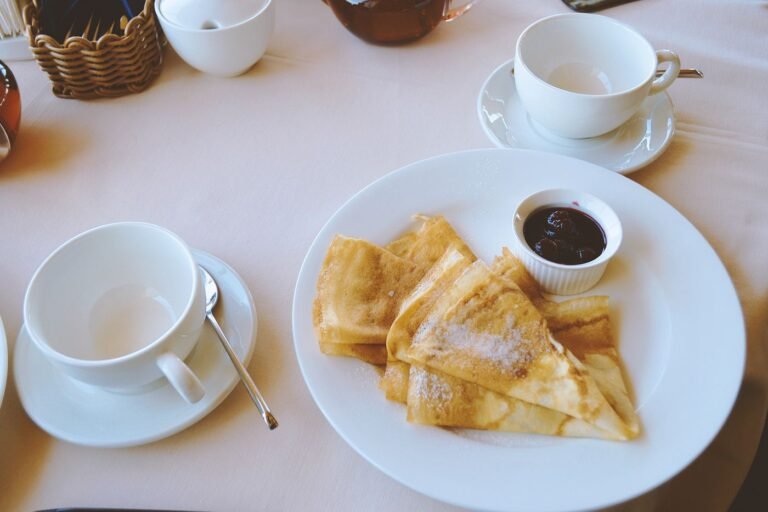 CrêpesFrench crêpes, in grams and cups
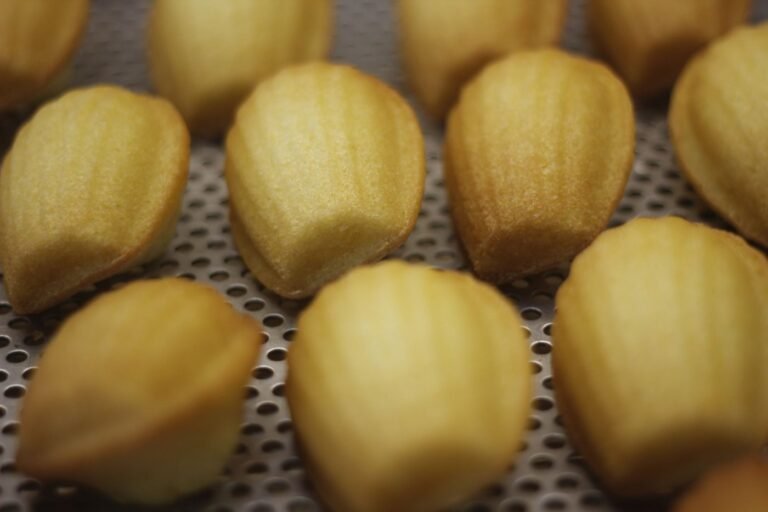 MadeleinesFrench madeleines, in grams and cups
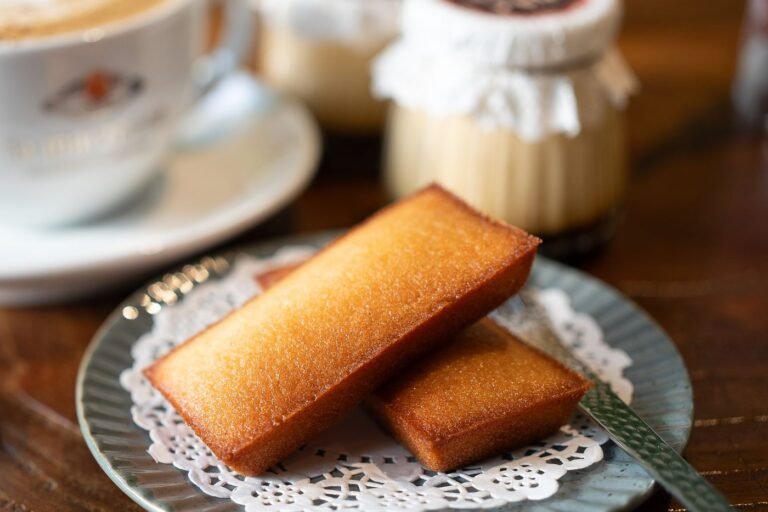 FinanciersFrench almond financiers, in grams and cupsPaste your ownAny French recipe in cups and °F, with a link to share
Questions people ask
What is a far breton?
A dense baked custard from Brittany, usually studded with prunes. The batter is poured rather than built – flour, sugar, eggs and a lot of whole milk – and it sets in the oven into something between a flan and a cake.
Do you have to put prunes in a far breton?
The version both of our Breton sources publish is the one with prunes, far breton aux pruneaux, and that is the recipe on this page. Neither source gives quantities for a plain one, so we have not published one.
Why is my far breton runny in the middle?
It is probably not cooled yet. Both sources bake it until it is well browned and still trembles slightly in the centre, then serve it at room temperature or slightly cold – it finishes setting as it cools, and a slice cut hot will run.
How many cups is 750 ml of milk?
About 3 cups + 3 tbsp. French recipes write this as 75 cl; see French recipe abbreviations for the rest of the shorthand.
What oven temperature is 180 °C?
About 350 °F, and thermostat 6 on a French dial. Tourisme Bretagne specifies 180 °C chaleur tournante, which is fan-assisted; see French oven temperatures.
Can I make it the day before?
Yes, and it is arguably better for it: a far breton is eaten cold or at room temperature, so baking it a day ahead and keeping it covered in the fridge suits the recipe rather than compromising it.
Cite this page: Mangez Moi, “Far Breton in Cups: Breton Prune Custard Cake Recipe,” mangezmoi.com, updated October 13, 2026, https://mangezmoi.com/recipes/far-breton/. Free to reuse under CC BY 4.0 with credit and a link.